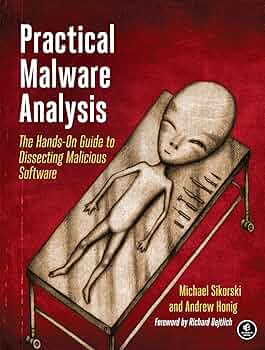
Practical Malware Analysis: The Hands-On Guide to Dissecting Malicious Software by Michael Sikorski
Overview
Practical Malware Analysis by Michael Sikorski and Andrew Honig is the industry-standard guide for malware analysts, incident responders, and security researchers who need to understand, dissect, and defeat malicious software. As malware becomes increasingly sophisticated with autonomous capabilities, polymorphic code, and anti-analysis techniques, the ability to reverse engineer malicious binaries is an essential skill for any serious security professional. This hands-on guide teaches you systematic approaches to static and dynamic malware analysis using industry-standard tools including IDA Pro, OllyDbg, WinDbg, and custom Python scripts. Starting with foundational concepts and progressing through advanced techniques, you’ll learn to identify malware functionality, extract indicators of compromise (IOCs), understand communication protocols, defeat anti-analysis measures, and reconstruct attacker intentions. The book covers PE file format analysis, x86 assembly language for reverse engineering, debugging techniques, network signature development, and behavioral analysis in sandboxed environments. Advanced chapters tackle packed/obfuscated malware, rootkits, kernel-mode code analysis, and anti-VM/anti-debugging evasion. Each chapter includes practical labs with real malware samples, allowing you to develop hands-on skills in a safe environment. The systematic methodology taught in this book forms the foundation for GREM (GIAC Reverse Engineering Malware) certification and professional malware analysis careers. Essential for SOC analysts investigating incidents, threat intelligence researchers tracking APT groups, and anyone in the malware analysis and reverse engineering field.
Pros & Cons
Pros
- Comprehensive lab-based hands-on approach
- Includes real malware samples for practice
- Systematic methodology for static and dynamic analysis
- x86 assembly language for reverse engineering
- PE file format and Windows internals coverage
- IDA Pro and OllyDbg usage extensively covered
- Debugging techniques and anti-debugging bypasses
- Packed and obfuscated malware analysis
- Network behavior and C2 communication analysis
- Rootkit and kernel-mode malware analysis
- Behavioral analysis in sandboxed environments
- IOC extraction and signature development
- Anti-VM and anti-analysis evasion techniques
- Excellent preparation for GREM certification
- Written by experienced malware analysts
- Progressive difficulty from beginner to advanced
- Includes custom Python scripting for automation
- Real-world malware samples and case studies
- Comprehensive appendices and reference material
- Still relevant for modern malware analysis
Cons
- Published in 2012 (some tools and techniques dated)
- Focused on Windows malware only
- No Linux or macOS malware analysis
- Minimal mobile malware coverage
- Modern malware obfuscation techniques missing
- Limited coverage of fileless malware
- No cloud or container-based malware analysis
- Scripting examples use Python 2 (not Python 3)
- IDA Pro and other tools can be expensive
- Requires Windows analysis environment setup
- Steep learning curve for beginners
- Assembly language knowledge is challenging
- No online lab environment provided
- Some malware samples no longer accessible
- Limited automation and YARA rule development
Ready to get started with Practical Malware Analysis: The Hands-On Guide to Dissecting Malicious Software by Michael Sikorski?
Click below to visit their official website and get the best deal.
Visit Official Website →More Hacking Books Options